
What Is the Vestibular System?
The vestibular system is a sensory network in the inner ear and brain that detects head movement, position, and balance. It works with vision and body-sensation signals to help you stay upright and coordinate movement. Changes in vestibular signals may contribute to dizziness, vertigo, unsteady walking, or difficulty focusing during motion.
Quick Facts About Vestibular System
Category
Sensory balance system
Used for
Balance and motion control
Common confusion
Vertigo describes a symptom, not the entire system
Also called
Balance System
Often discussed with
Vertigo Treatment
Key Takeaways About Vestibular System
- Inner-ear sensors detect changes in head position and movement.
- Balance depends on vestibular signals working with vision and body feedback.
- Vertigo is not the same as every type of dizziness.
How Vestibular System Works
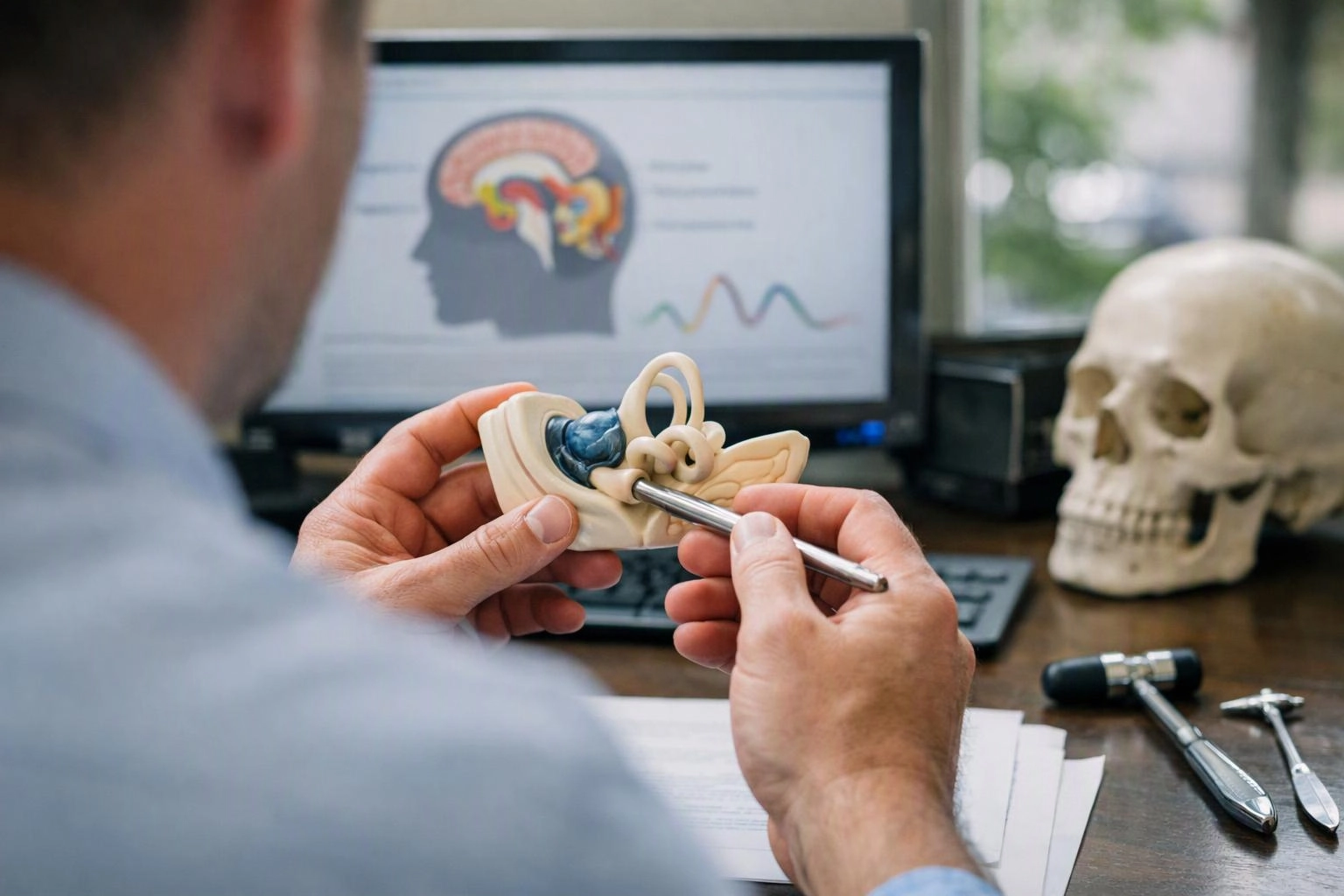
The vestibular system uses motion sensors in the inner ear to detect head rotation, tilt, and acceleration. Signals travel to the brain, which compares them with information from the eyes and joints. The brain then adjusts eye movement, muscle activity, and posture to support orientation.
Related glossary terms: Benign Paroxysmal Positional Vertigo, Concussion, Post-Concussion Syndrome.
The inner ear contains fluid-filled structures that respond when the head moves. A mismatch between vestibular signals and visual information may create a spinning sensation, motion sensitivity, or unsteadiness. Clinicians consider these responses alongside balance, walking, neck movement, and position-related symptoms when assessing a person with vertigo.
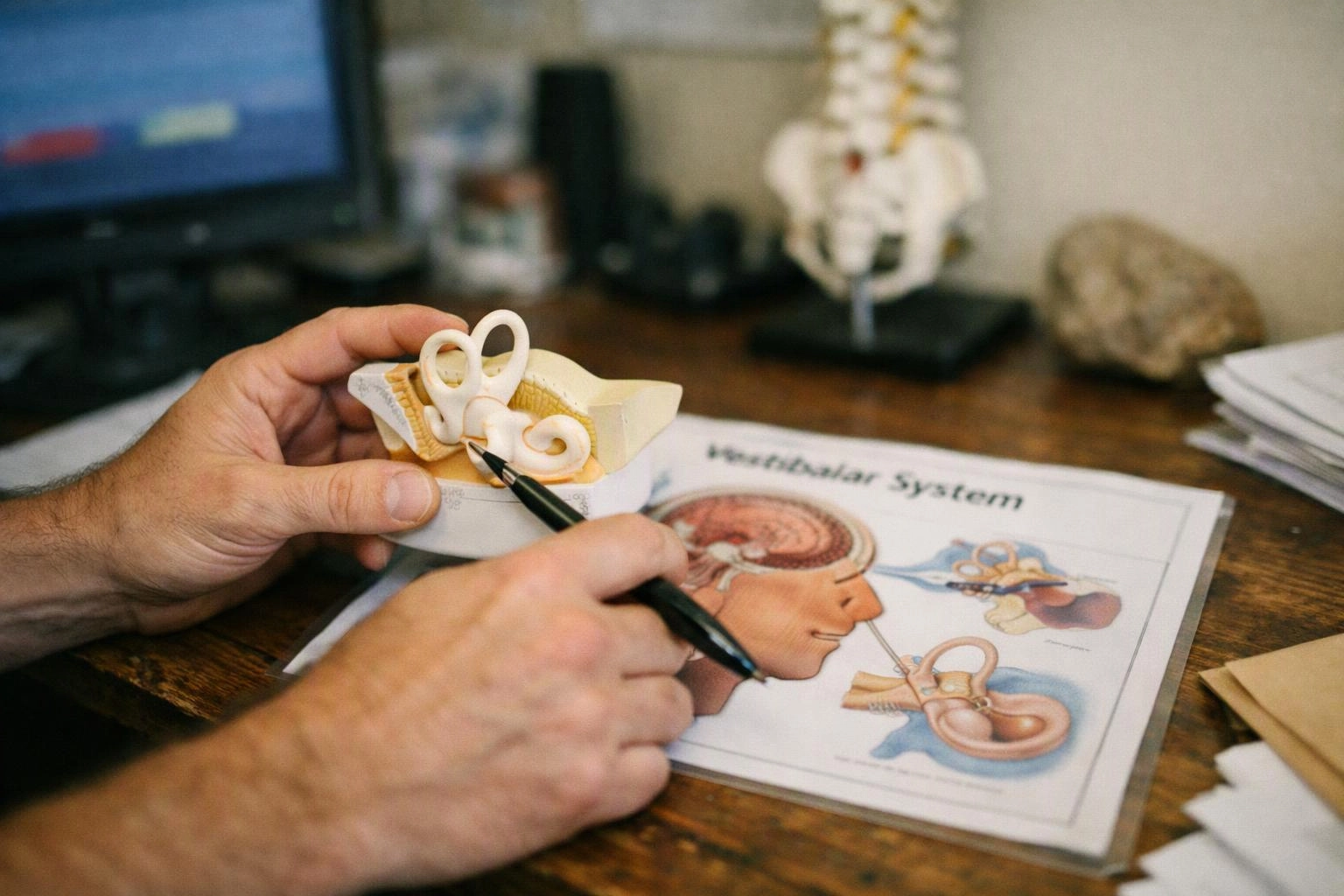
From the Arrowhead Clinic Chiropractor Marietta team
When we evaluate a person seeking Vertigo Treatment, we ask how symptoms relate to head position, visual focus, walking, and neck movement. We also observe balance and movement responses so our team can separate vestibular features from patterns that may involve other body systems.
Vestibular System in Practice: A Real-World Example
A person may feel the room spin when turning in bed or looking upward. During a Vertigo Treatment evaluation, the clinician considers the timing, position, balance response, and related neck symptoms.
Related Services
Related Terms
Benign Paroxysmal Positional Vertigo
Benign Paroxysmal Positional Vertigo is an inner-ear balance disorder that causes brief spinning sensations when the…
Concussion
A concussion is a mild traumatic brain injury caused by a blow, jolt, or force that…
Post-Concussion Syndrome
Post-Concussion Syndrome is a group of ongoing symptoms that can follow a concussion, even after the…
Cervical Spine
The cervical spine is the neck section of the spinal column that supports the head and…
Arrowhead Clinic Chiropractor Marietta
Have Questions About Vestibular System?
Contact Arrowhead Clinic Chiropractor Marietta for practical guidance on Vestibular System and related chiropractor work in Marietta.