
What Is a Concussion?
A concussion is a mild traumatic brain injury caused by a blow, jolt, or force that makes the brain move inside the skull. A concussion can affect thinking, balance, vision, mood, sleep, and physical comfort. Symptoms may appear immediately or develop later, and the injury can occur without loss of consciousness.
Quick Facts About Concussion
Category
Mild traumatic brain injury
Used for
Describing brain effects after impact
Common confusion
A concussion does not require loss of consciousness
Also called
Mild Traumatic Brain Injury, MTBI
Often discussed with
Auto Accident Injury Treatment, Whiplash Treatment
Key Takeaways About Concussion
- A concussion affects brain function after force or sudden movement.
- Symptoms may involve balance, concentration, vision, or mood.
- Loss of consciousness is not required for a concussion.
How Concussion Works
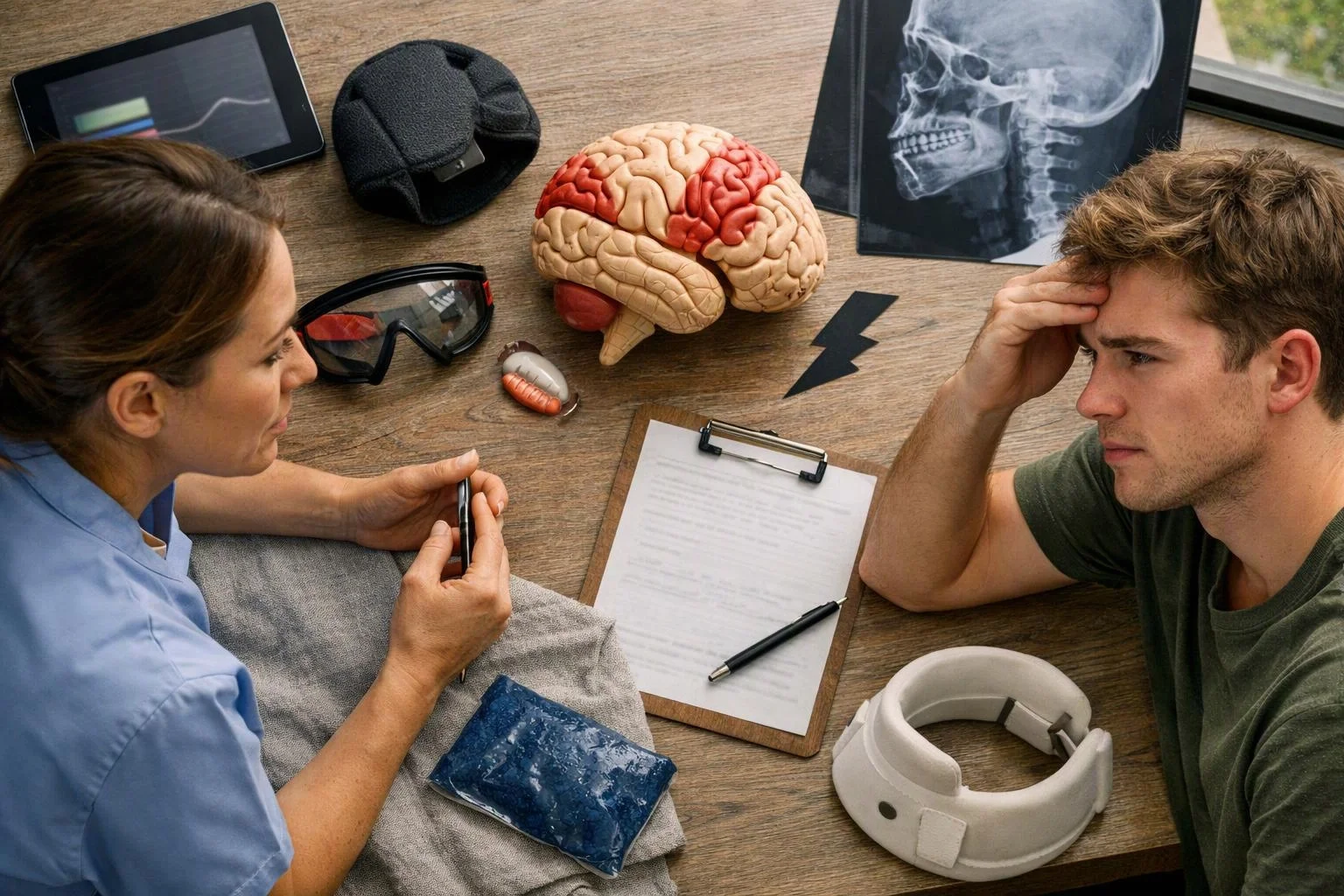
Concussion occurs when sudden force disrupts normal brain function. The force may come from a vehicle collision, a fall, or contact with another object. The brain does not need to strike a surface directly for symptoms to develop.
Related glossary terms: Post-Concussion Syndrome, Cervical Spine, Vestibular System.
Assessment focuses on changes in function, not on a single symptom. A clinician may ask about memory, attention, balance, vision, headache, nausea, sleep, and mood. Symptoms can overlap with neck strain, whiplash, or other injuries, so the full accident history helps place the findings in context.
Post-Concussion Syndrome describes symptoms that continue after the initial injury. The Vestibular System may also be involved when dizziness, balance changes, or motion sensitivity follow an accident.
From the Arrowhead Clinic Chiropractor Marietta team
When we assess concussion concerns after an auto accident, we review the reported force, symptom pattern, and changes in daily function. We also consider related neck, balance, and movement findings. Our team documents these details so the care plan reflects the person’s overall injury picture.
Concussion in Practice: A Real-World Example
After a rear-end collision, a driver may report headache, slowed concentration, and dizziness when turning the head. The clinical assessment considers those symptoms alongside possible neck strain and changes in balance.
Related Services
Related Terms
Post-Concussion Syndrome
Post-Concussion Syndrome is a group of ongoing symptoms that can follow a concussion, even after the…
Cervical Spine
The cervical spine is the neck section of the spinal column that supports the head and…
Vestibular System
The vestibular system is a sensory network in the inner ear and brain that detects head…
Arrowhead Clinic Chiropractor Marietta
Have Questions About Concussion?
Contact Arrowhead Clinic Chiropractor Marietta for practical guidance on Concussion and related chiropractor work in Marietta.