
What Is the Cervical Spine?
The cervical spine is the neck section of the spinal column that supports the head and permits controlled movement. It includes vertebrae, discs, joints, muscles, ligaments, and nerves. These structures work together during actions such as turning, nodding, and maintaining an upright head position. Problems in this area may contribute to neck pain or restricted motion.
Quick Facts About Cervical Spine
Category
Anatomical region
Used for
Assessing neck movement and related symptoms
Common confusion
The neck region is not the same as one neck muscle
Also called
Neck Spine, Cervical region
Often discussed with
Neck Pain Treatment, Chiropractic Adjustments
Key Takeaways About Cervical Spine
- It is the neck portion of the spinal column.
- Its joints and muscles help control head movement.
- Neck pain does not always identify one specific structure.
How Cervical Spine Works
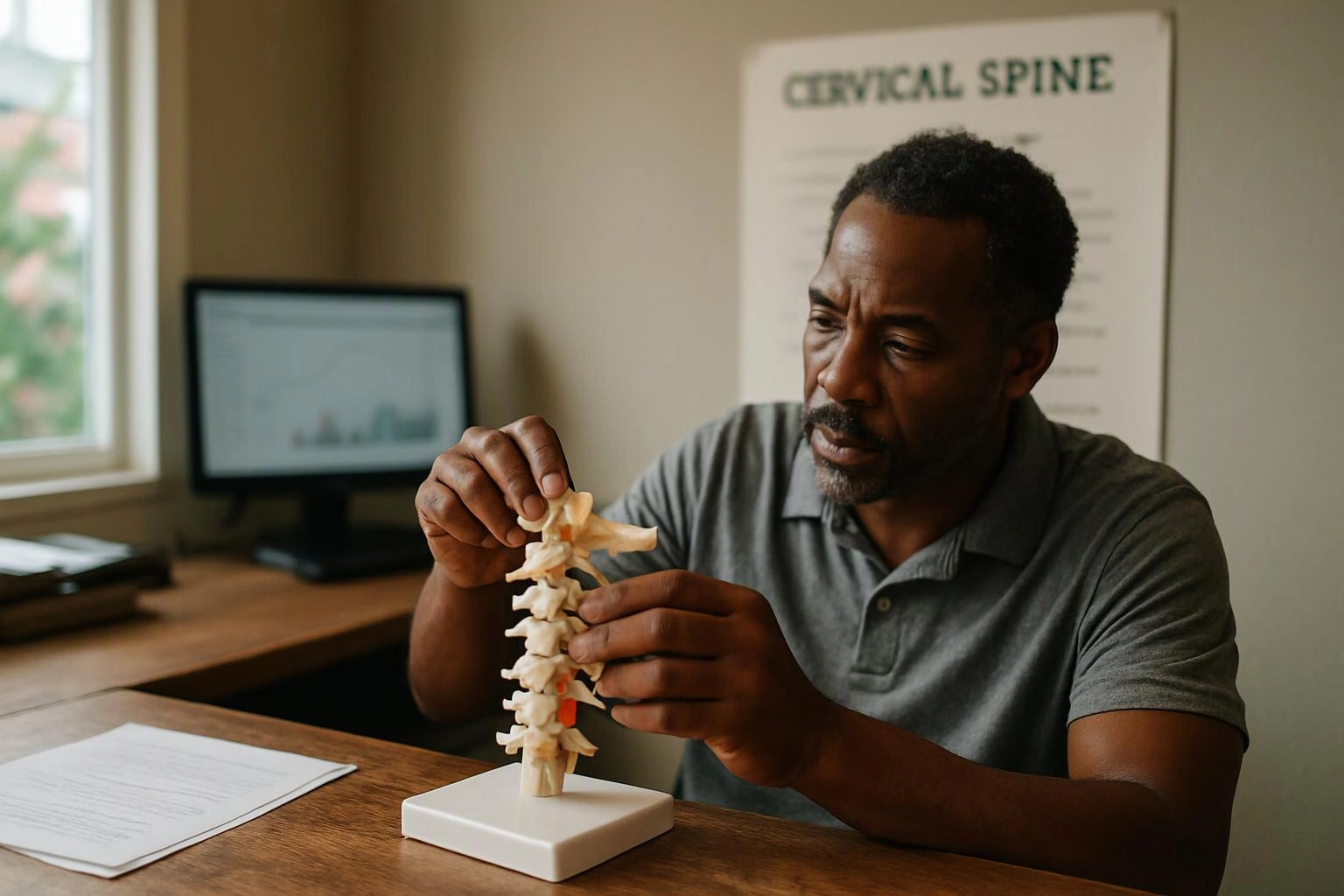
The cervical spine works as a mobile support structure between the head and the upper back. Small spinal bones, discs, joints, muscles, ligaments, and nerves share the demands of movement and stability. The neck bends, rotates, and extends through coordinated motion across several connected areas. A change in one area can affect how nearby tissues move.
Related glossary terms: Cervicogenic Headache, Facet Joint, Range Of Motion.
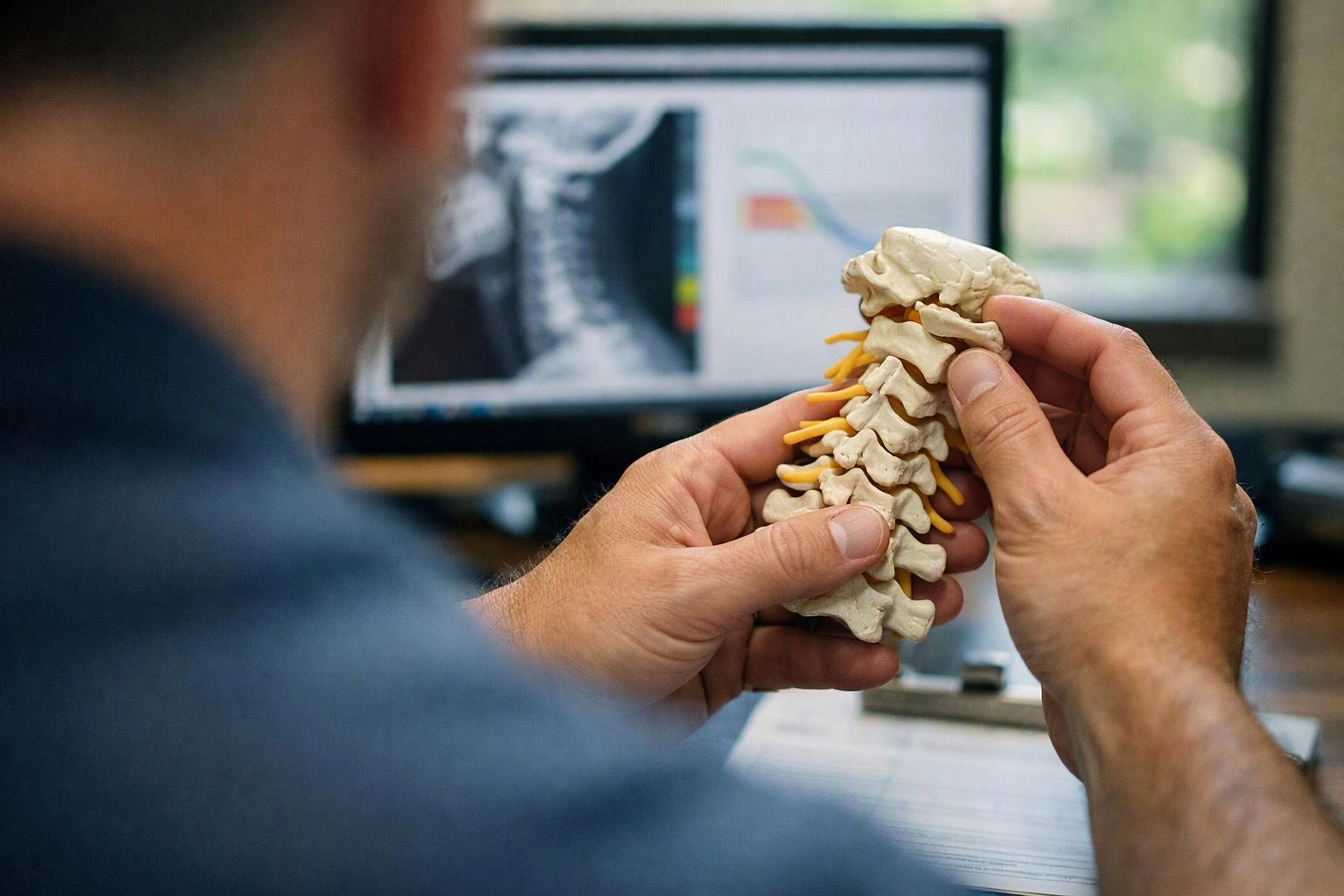
Clinicians assess the cervical spine by observing posture, active range of motion, muscle control, and symptom patterns. The facet joints guide motion between neighboring vertebrae, while the spinal nerves carry signals between the neck and other parts of the body. During a neck pain evaluation, these findings help distinguish movement limitations from symptoms that may involve surrounding muscles or nerves.
From the Arrowhead Clinic Chiropractor Marietta team
When we evaluate the cervical spine during Neck Pain Treatment, we review neck movement, posture, and the relationship between symptoms and nearby tissues. We combine those observations with a focused physical assessment to guide the care plan and track meaningful changes in function.
Cervical Spine in Practice: A Real-World Example
A person with neck pain may have difficulty turning the head while checking traffic. An assessment may examine cervical spine movement, posture, and muscle coordination to identify which activities reproduce the limitation.
Related Services
Related Terms
Cervicogenic Headache
Cervicogenic Headache is a secondary headache that begins in the neck and sends pain into the…
Facet Joint
Facet Joint is a small synovial joint at the back of the spine that connects neighboring…
Range Of Motion
Range Of Motion is the extent to which a joint can move through its available directions…
Thoracic Spine
The thoracic spine is the middle section of the spinal column, located between the cervical spine…
Arrowhead Clinic Chiropractor Marietta
Have Questions About Cervical Spine?
Contact Arrowhead Clinic Chiropractor Marietta for practical guidance on Cervical Spine and related chiropractor work in Marietta.