
What Is Benign Paroxysmal Positional Vertigo?
Benign Paroxysmal Positional Vertigo is an inner-ear balance disorder that causes brief spinning sensations when the head changes position. Small calcium particles can move into a semicircular canal and disturb signals used for balance. Symptoms may appear when turning in bed, looking upward, bending over, or sitting up after lying down.
Quick Facts About Benign Paroxysmal Positional Vertigo
Category
Inner-ear balance disorder
Used for
Describing position-triggered spinning
Common confusion
Lightheadedness or faintness
Also called
Benign Positional Vertigo, BPPV
Often discussed with
Vertigo Treatment
Key Takeaways About Benign Paroxysmal Positional Vertigo
- Head movement commonly triggers the spinning sensation.
- The problem involves balance signals from the inner ear.
- Vertigo is not the same as general lightheadedness.
How Benign Paroxysmal Positional Vertigo Works
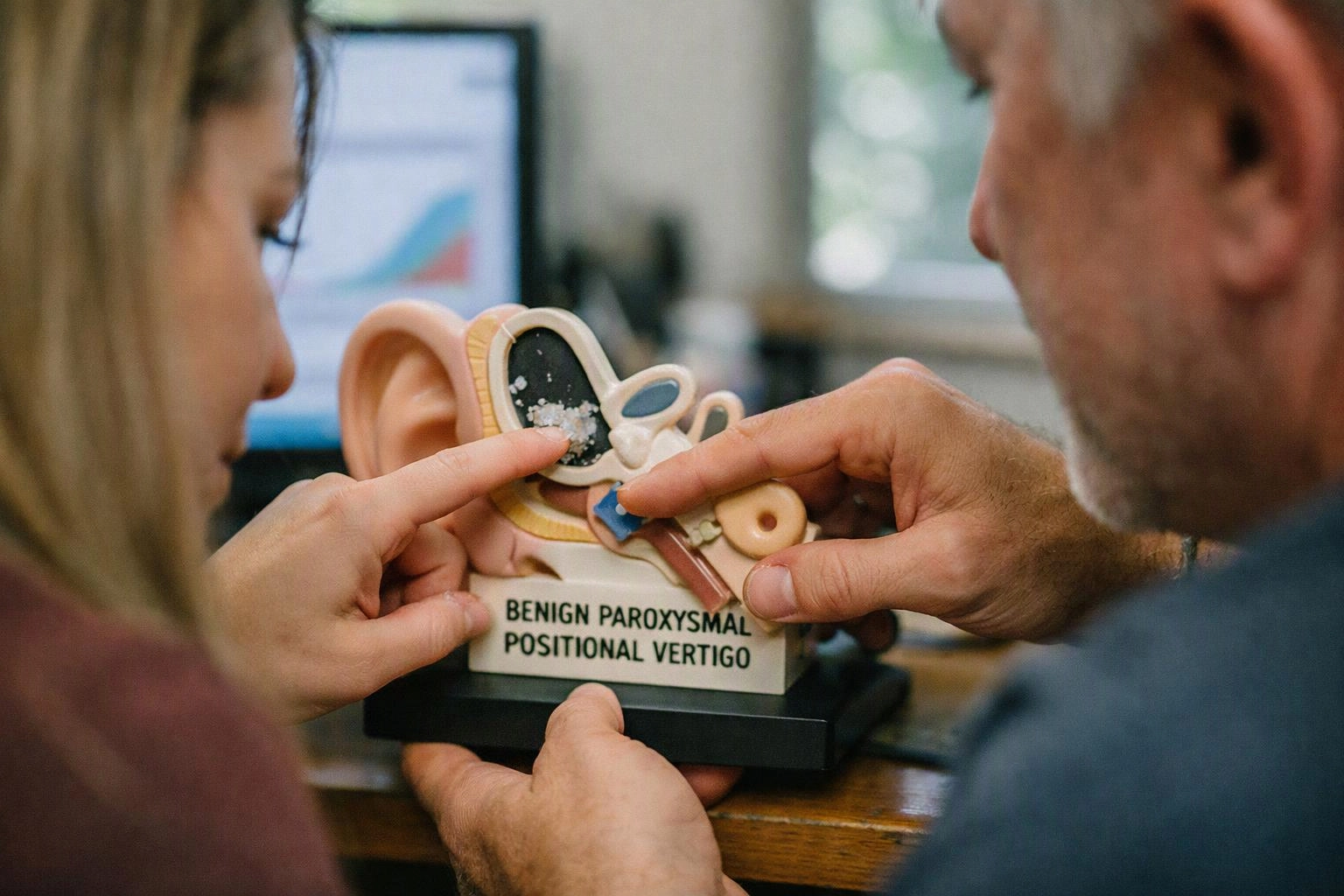
Benign Paroxysmal Positional Vertigo develops when calcium particles called otoconia move from their usual location into a semicircular canal. The canal senses head rotation, so loose particles can create an inaccurate motion signal when the head moves. The brain then receives balance information that does not match signals from the eyes and body.
Related glossary terms: Vestibular System, Gait Analysis, Range Of Motion.
Assessment focuses on the movement that brings on symptoms, the direction of eye motion, and the pattern of the episode. A clinician may use a positional test to observe these responses. Treatment often involves a guided repositioning maneuver that moves the particles toward an area where they no longer disrupt canal signals. Vestibular rehabilitation may be considered when balance remains affected after the positional pattern changes.
From the Arrowhead Clinic Chiropractor Marietta team
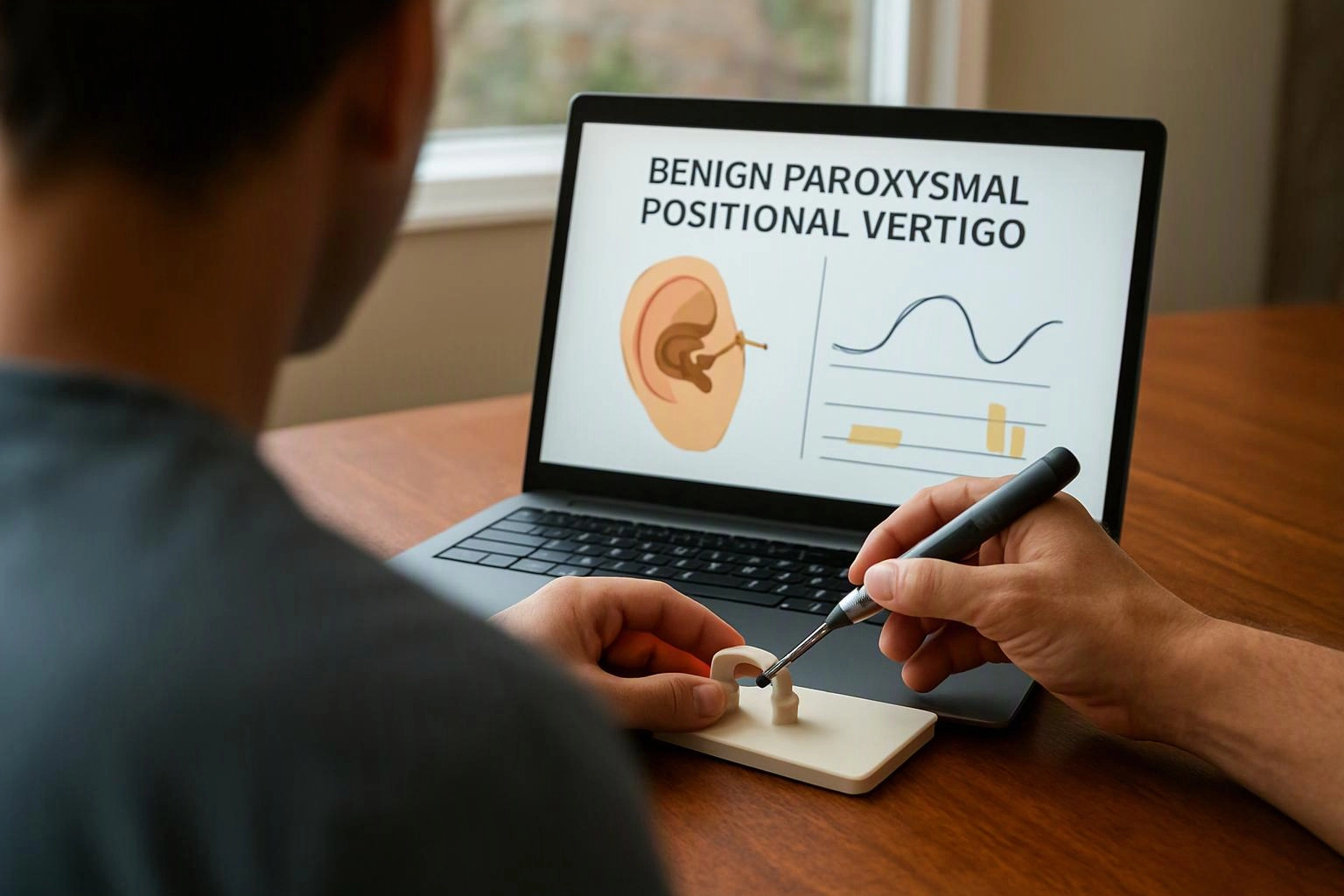
When we assess Benign Paroxysmal Positional Vertigo, we ask which head positions bring on symptoms and observe balance-related responses. We distinguish a positional pattern from symptoms that may reflect another condition. Our team uses that information to guide care within Vertigo Treatment and to identify cases that need broader medical assessment.
Benign Paroxysmal Positional Vertigo in Practice: A Real-World Example
A person may feel the room spin when rolling onto one side in bed or looking up at a shelf. A positional assessment can help identify whether the episode follows the pattern associated with Benign Paroxysmal Positional Vertigo.
Related Services
Related Terms
Vestibular System
The vestibular system is a sensory network in the inner ear and brain that detects head…
Gait Analysis
A gait analysis is a structured assessment of how you walk, including foot placement, stride pattern…
Range Of Motion
Range Of Motion is the extent to which a joint can move through its available directions…
Concussion
A concussion is a mild traumatic brain injury caused by a blow, jolt, or force that…
Arrowhead Clinic Chiropractor Marietta
Have Questions About Benign Paroxysmal Positional Vertigo?
Contact Arrowhead Clinic Chiropractor Marietta for practical guidance on Benign Paroxysmal Positional Vertigo and related chiropractor work in Marietta.