
What Is Occlusion?
Occlusion is the contact and alignment between the upper and lower teeth when the mouth closes or moves. In TMJ care, occlusion describes how the bite distributes pressure across the teeth and jaw joints. Dental wear, tooth position, muscle activity, and jaw movement can all affect this relationship.
Quick Facts About Occlusion
Category
Bite and jaw function
Used for
TMJ assessment
Common confusion
Occlusion is not bruxism
Also called
Bite Alignment, bite relationship
Often discussed with
TMJ Treatment
Key Takeaways About Occlusion
- Occlusion concerns tooth contact and jaw movement together.
- Bite contact may change pressure around the jaw joints.
- Occlusion is not the same as bruxism, which involves forceful tooth grinding.
How Occlusion Works
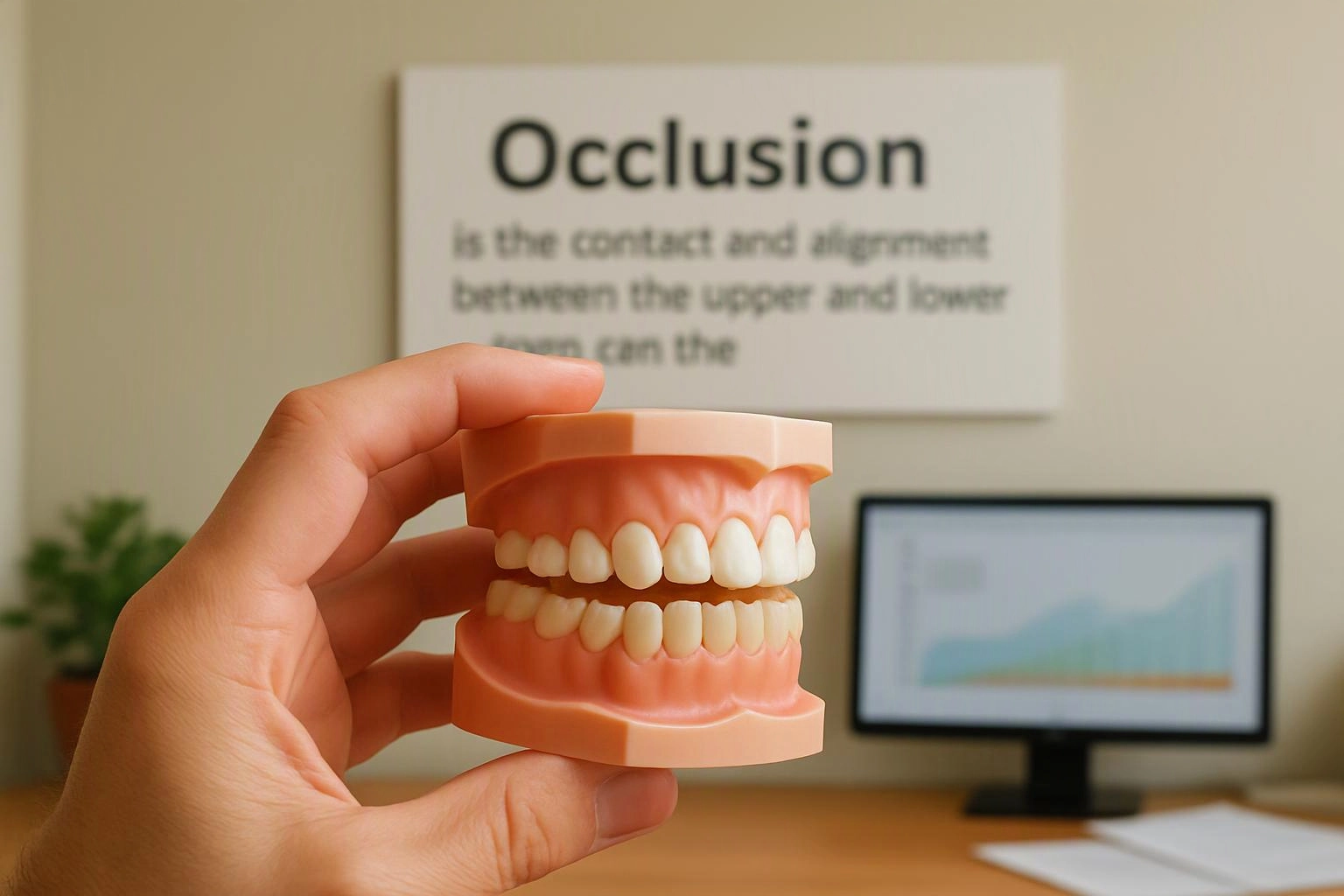
Occlusion describes the way the teeth meet as the jaw closes, opens, or moves from side to side. The contact pattern guides jaw motion and affects how pressure travels through the teeth, chewing muscles, and temporomandibular joints. A balanced pattern allows smooth movement without one area taking excess contact.
Related glossary terms: Bruxism, Range Of Motion, Referred Pain.
Clinicians assess occlusion by observing the bite, jaw tracking, tooth contact, and muscle response. They may also ask about clicking, tenderness, limited opening, or changes in chewing comfort. In TMJ treatment, these observations help separate bite-related findings from problems linked to muscle tension, joint irritation, or habits such as clenching. Occlusion is one part of an assessment, not a diagnosis by itself.
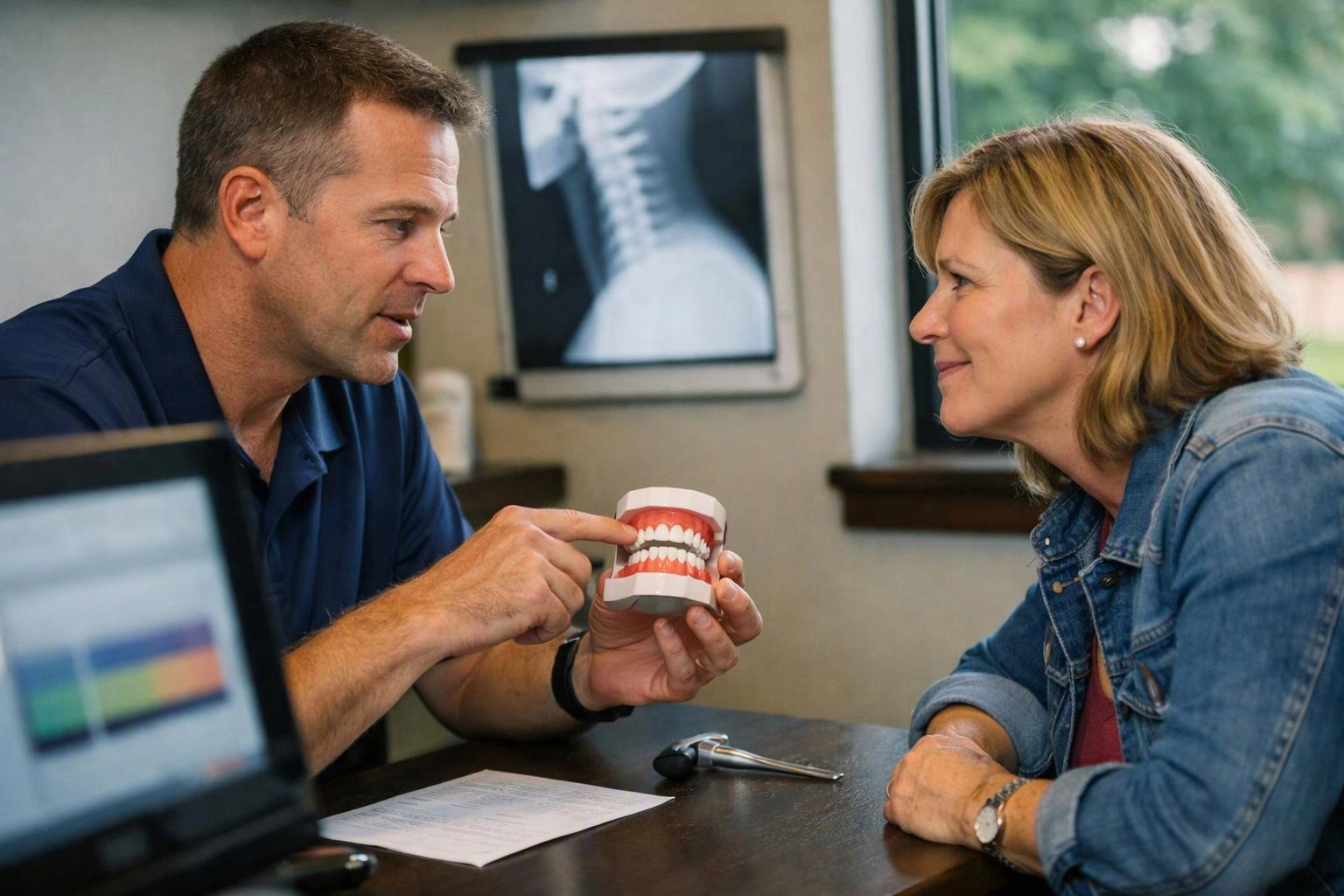
From the Arrowhead Clinic Chiropractor Marietta team
When we assess occlusion during TMJ treatment, we observe how the jaw opens and closes and how the teeth meet during movement. We also consider muscle tenderness, joint sounds, and reported changes in chewing comfort. Our team uses these findings as part of the broader clinical picture.
Occlusion in Practice: A Real-World Example
A person with TMJ discomfort may notice that one side of the teeth touches sooner than the other during closing. The clinician records that occlusal pattern while also checking jaw movement and muscle tenderness.
Related Services
Related Terms
Bruxism
Bruxism is a repeated habit of clenching or grinding the teeth, often during sleep but sometimes…
Range Of Motion
Range Of Motion is the extent to which a joint can move through its available directions…
Referred Pain
Referred Pain is pain felt in an area that differs from the tissue or structure causing…
Tension Headache
A Tension Headache is a common headache pattern linked with pressure, tightening, or aching across the…
Arrowhead Clinic Chiropractor Marietta
Have Questions About Occlusion?
Contact Arrowhead Clinic Chiropractor Marietta for practical guidance on Occlusion and related chiropractor work in Marietta.