
What Is Bruxism?
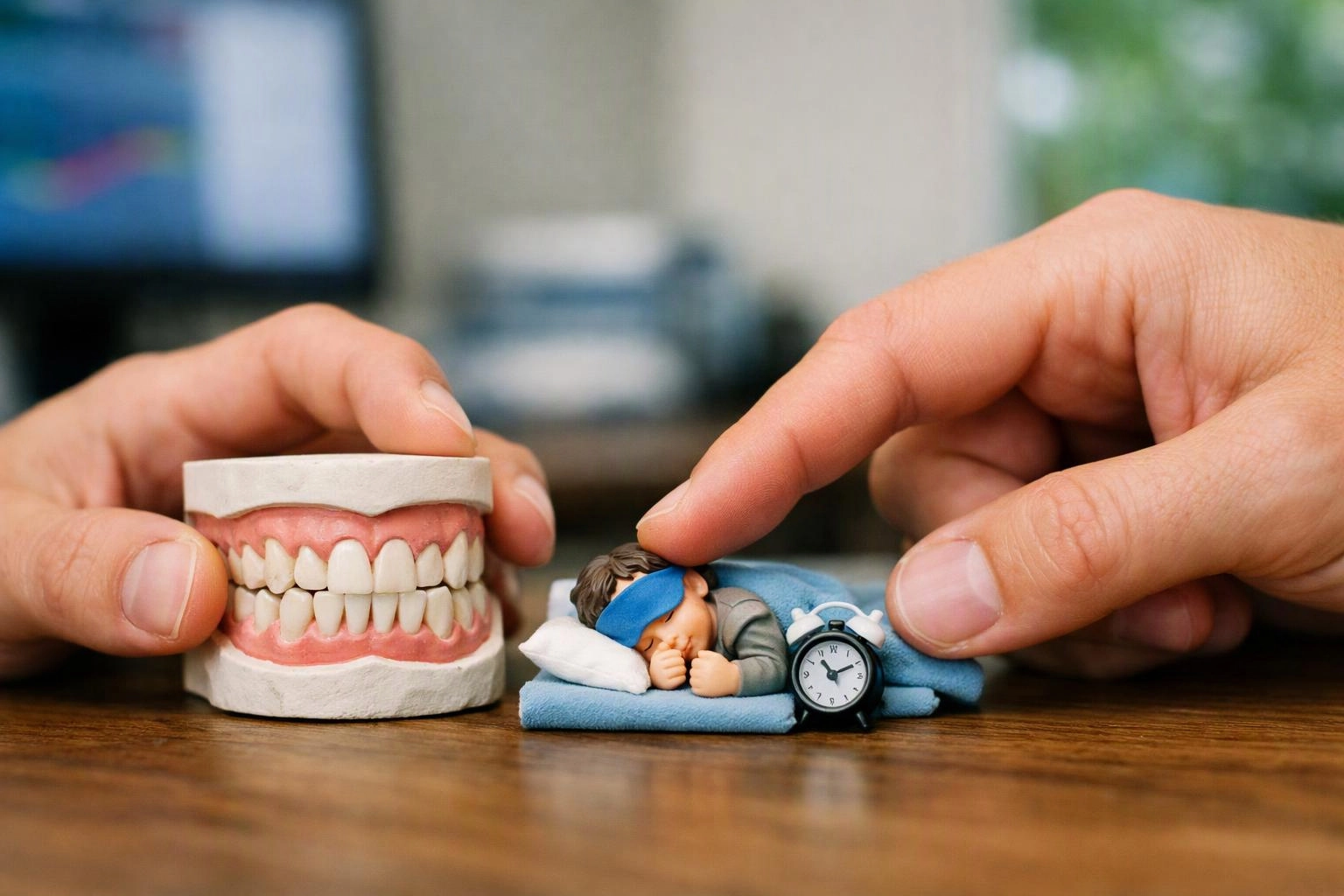
Bruxism is a repeated habit of clenching or grinding the teeth, often during sleep but sometimes while awake. The activity places force on the jaw muscles, jaw joints, and teeth. Some people notice jaw soreness, tooth wear, facial tension, or headaches, while others have no clear symptoms.
Quick Facts About Bruxism
Category
Jaw muscle and tooth-clenching habit
Used for
Describing grinding, clenching, and related jaw tension
Common confusion
Normal chewing is not bruxism
Also called
Teeth Grinding, Teeth clenching
Often discussed with
TMJ Treatment
Key Takeaways About Bruxism
- Bruxism may occur during sleep or while a person is awake.
- Jaw tension and tooth wear can provide useful clinical clues.
- Bruxism is not the same as ordinary chewing or speaking.
How Bruxism Works

Bruxism involves repeated activation of the muscles that close and move the jaw. During sleep, the activity may happen without conscious awareness. While awake, clenching may appear during concentration, stress, or sustained effort.
Related glossary terms: Occlusion, Range Of Motion, Referred Pain.
A clinician may look at jaw movement, muscle tenderness, tooth contact, and signs of wear when assessing the pattern. TMJ symptoms can overlap with bruxism, so the assessment also considers the jaw joints and nearby muscles. A finding does not establish one single cause because several factors can produce similar discomfort.
From the Arrowhead Clinic Chiropractor Marietta team
When we assess bruxism, we ask about clenching, grinding, jaw fatigue, and related symptoms. We also observe jaw movement and muscle tenderness in the context of TMJ Treatment. Our team uses these findings to separate jaw muscle tension from concerns that may need another type of evaluation.
Bruxism in Practice: A Real-World Example
A person may wake with tight jaw muscles and notice that the teeth feel sensitive during breakfast. During a TMJ Treatment visit, the clinician may connect those signs with reported nighttime clenching and observed jaw tension.
Related Services
Related Terms
Occlusion
Occlusion is the contact and alignment between the upper and lower teeth when the mouth closes…
Range Of Motion
Range Of Motion is the extent to which a joint can move through its available directions…
Referred Pain
Referred Pain is pain felt in an area that differs from the tissue or structure causing…
Tension Headache
A Tension Headache is a common headache pattern linked with pressure, tightening, or aching across the…
Arrowhead Clinic Chiropractor Marietta
Have Questions About Bruxism?
Contact Arrowhead Clinic Chiropractor Marietta for practical guidance on Bruxism and related chiropractor work in Marietta.