
What Is Piriformis Syndrome?
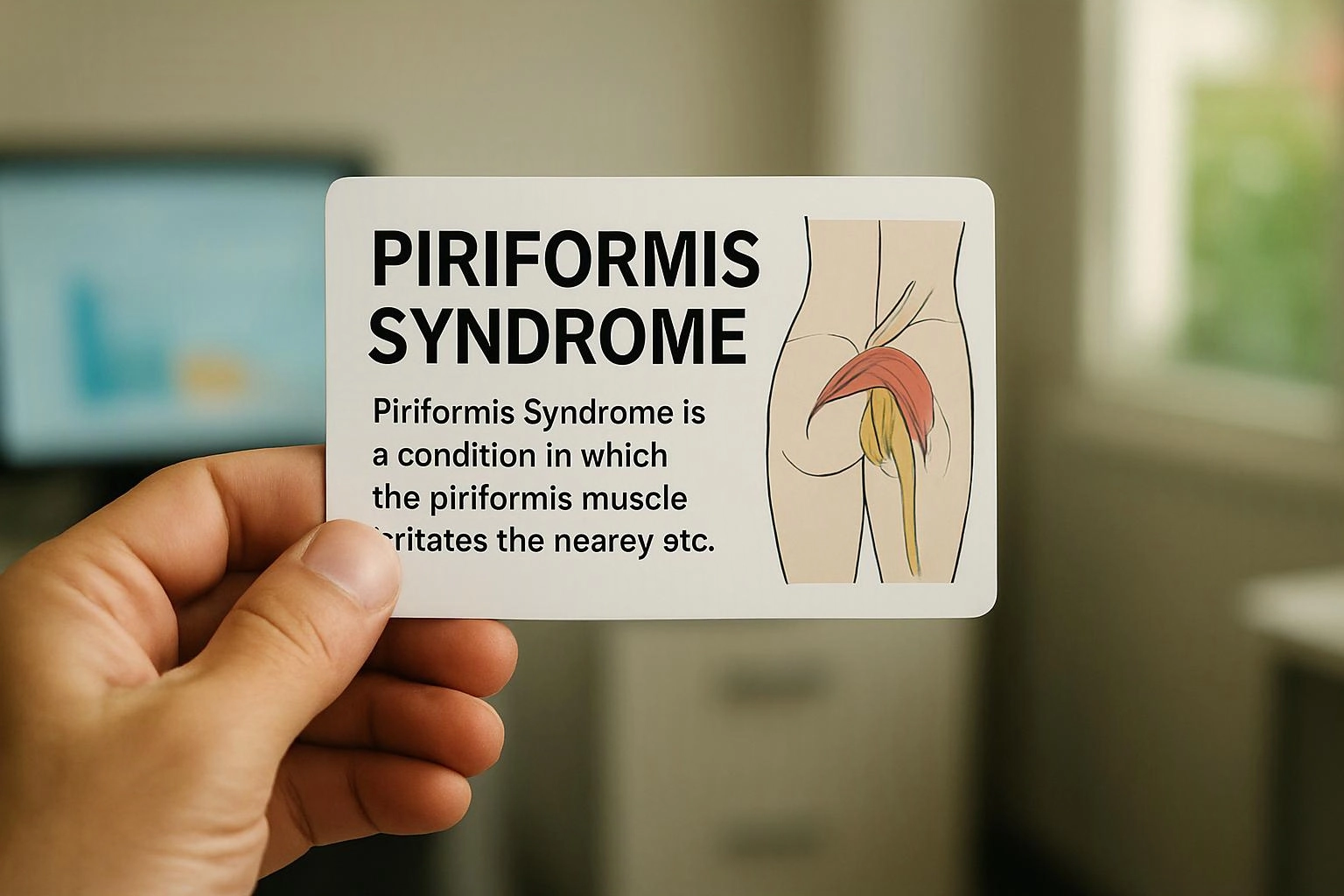
Piriformis Syndrome is a condition in which the piriformis muscle irritates the nearby sciatic nerve. The muscle sits deep in the buttock and helps turn the hip. Irritation may produce buttock pain that travels down the leg, sometimes with tingling or numbness. Symptoms can resemble other causes of sciatica.
Quick Facts About Piriformis Syndrome
- Category
- Deep buttock muscle condition
- Used for
- Describing a possible source of sciatic symptoms
- Common confusion
- Sciatica from a lower back nerve
- Often discussed with
- Sciatica Treatment
Key Takeaways About Piriformis Syndrome
- Pain may change with hip movement or sitting.
- The symptom pattern helps guide an exam.
- Sciatica describes symptoms, not a single diagnosis.
How Piriformis Syndrome Works

Piriformis syndrome involves irritation near the path of the sciatic nerve. A tight or irritated piriformis muscle may put pressure on nearby nerve tissue. Hip movements can change tension in the muscle and affect how symptoms feel. Related service: Sciatica Treatment.
Related glossary terms: Lumbar Radiculopathy, Nerve Compression, Muscle Spasm.
Sitting may place pressure on the deep buttock area. Some people notice pain during sitting or movements that turn the hip. The pattern varies, so a symptom alone doesn't identify the source.
Sciatica is a name for pain along the nerve's path. A problem in the lower back can also produce that pattern. The location of discomfort and the way it changes with movement can help distinguish possible sources.
An exam may include questions about activities and a check of hip and back movement. Findings from the exam help a clinician decide whether the piriformis muscle fits the symptom pattern.
From the Arrowhead Clinic Chiropractor Marietta team
When we see someone for sciatica treatment, we ask where the pain starts and which movements affect it. We also check hip and lower back movement. That context helps our team consider whether the piriformis muscle may be involved.
Piriformis Syndrome in Practice: A Real-World Example
A person notices buttock pain during a long drive and feels discomfort down the leg. During a sciatica treatment visit, the person describes the pattern and has hip and back movement checked.
Related Services
Related Terms
Lumbar Radiculopathy
Lumbar Radiculopathy is a condition in which a nerve root in the lower back becomes irritated or compressed.
Nerve Compression
Nerve Compression is pressure on a nerve from nearby tissue, such as a spinal disc, bone, or muscle.
Muscle Spasm
A muscle spasm is a sudden, involuntary tightening of a muscle that you cannot control.
Range of Motion
Range of motion is the amount of movement available at a joint in a particular direction.
Arrowhead Clinic Chiropractor Marietta
Have Questions About Piriformis Syndrome?
Contact Arrowhead Clinic Chiropractor Marietta for practical guidance on Piriformis Syndrome and related chiropractor work in Marietta.