
What Is Nerve Compression?
Nerve Compression is pressure on a nerve from nearby tissue, such as a spinal disc, bone, or muscle. The pressure can disrupt signals between the brain and parts of the body. It can lead to pain, tingling, numbness, or weakness in the area served by that nerve.
Quick Facts About Nerve Compression
- Category
- Nerve condition
- Used for
- Describing pressure on a nerve
- Common confusion
- Sciatica is a symptom pattern
- Also called
- Pinched Nerve
- Often discussed with
- Sciatica Treatment, Herniated Disc Treatment
Key Takeaways About Nerve Compression
- Symptoms may appear away from the pressured area.
- The symptom pattern can help identify the affected nerve.
- Sciatica describes symptoms, not a single cause.
How Nerve Compression Works
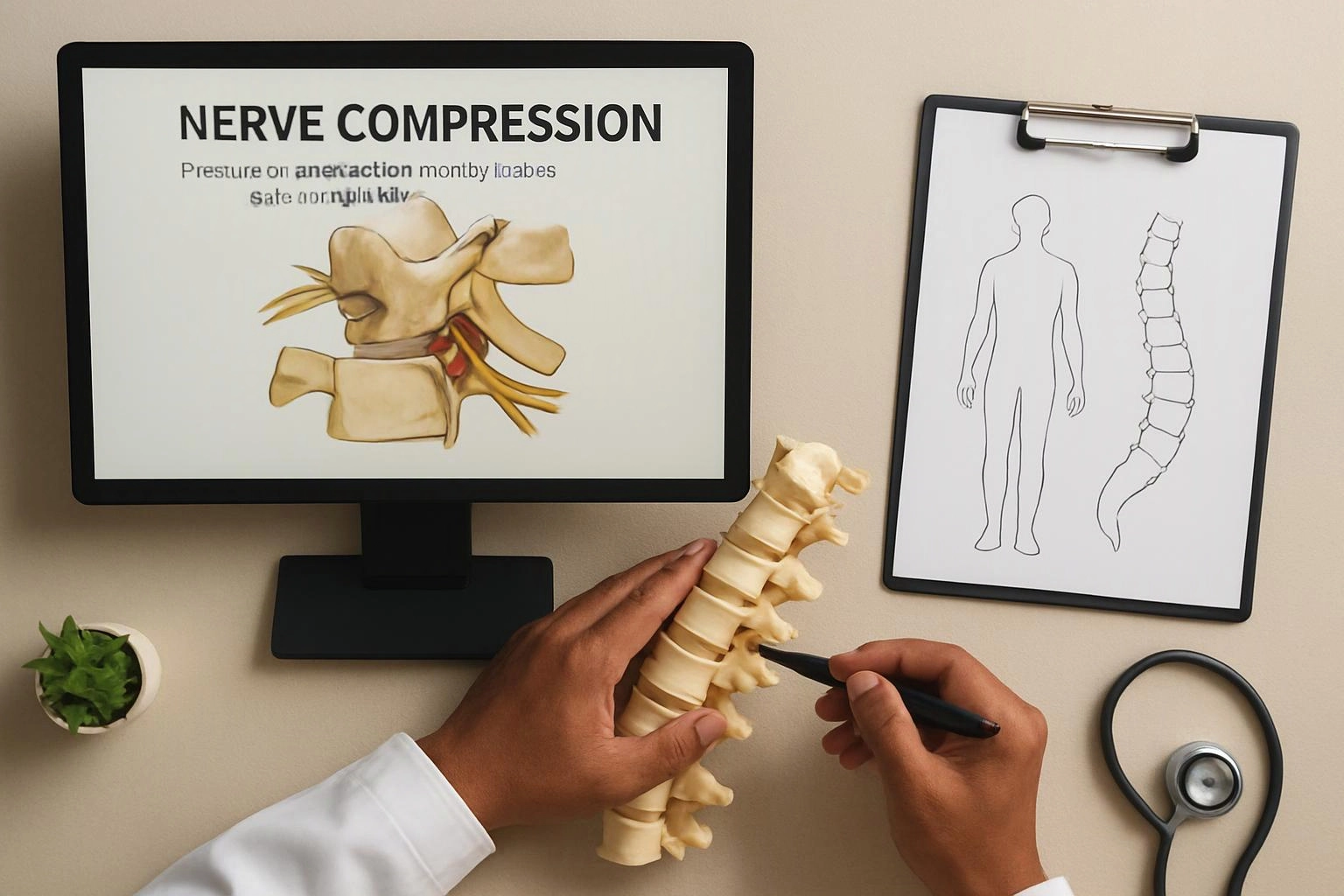
Nerve compression can interfere with the messages a nerve carries. Nerves carry signals that help you feel sensations and control muscles. Pressure may change those signals, so the affected area may feel different or move with less strength. Related service: Sciatica Treatment.
Related glossary terms: Bulging Disc, Lumbar Radiculopathy, Piriformis Syndrome.
A nerve root leaves the spinal cord and travels toward other parts of your body. Pressure near a nerve root in the lower back may produce symptoms along its path into the leg. The location of those symptoms can help distinguish a nerve problem from pain limited to a sore muscle.
Sciatica describes a pattern of symptoms that travels from the lower back or buttock into the leg. Pressure on a nerve root is a possible cause, but other conditions can also produce sciatica symptoms. The term alone doesn't identify the source of the pain.
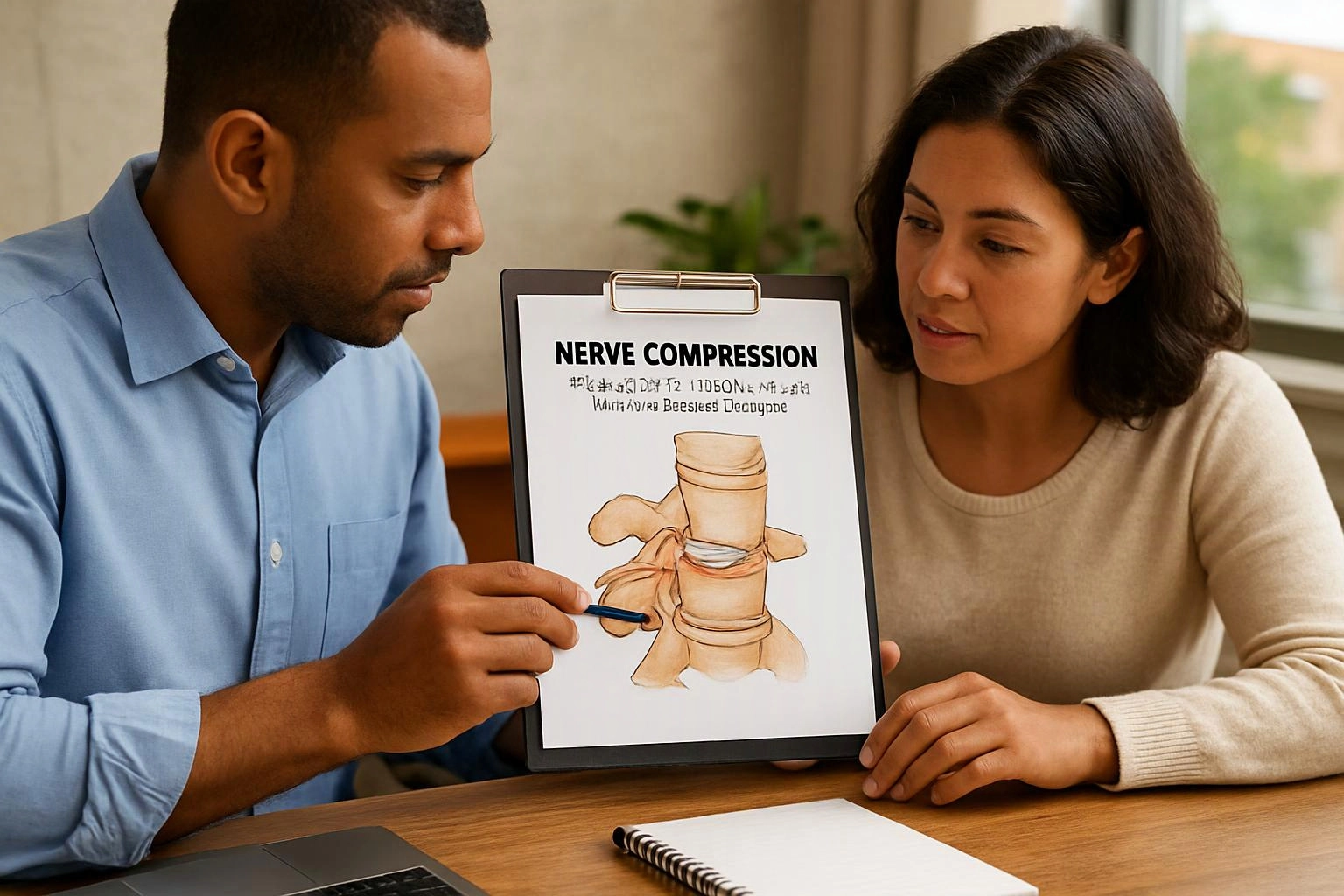
From the Arrowhead Clinic Chiropractor Marietta team
When we discuss nerve compression during sciatica care, we ask where your symptoms travel. We also consider whether you notice changes in feeling or strength. That pattern helps us understand your concerns and plan the next part of your assessment.
Nerve Compression in Practice: A Real-World Example
A person has pain that travels from the lower back into the leg. During a sciatica assessment, the symptom pattern may point to pressure on a nerve root near the lower spine.
Related Services
Related Terms
Bulging Disc
A bulging disc is a spinal disc that extends beyond its usual edge between the bones of the spine.
Lumbar Radiculopathy
Lumbar Radiculopathy is a condition in which a nerve root in the lower back becomes irritated or compressed.
Piriformis Syndrome
Piriformis Syndrome is a condition in which the piriformis muscle irritates the nearby sciatic nerve.
Disc Extrusion
A disc extrusion is a type of herniated disc in which inner disc material pushes through a tear in the outer layer.
Arrowhead Clinic Chiropractor Marietta
Have Questions About Nerve Compression?
Contact Arrowhead Clinic Chiropractor Marietta for practical guidance on Nerve Compression and related chiropractor work in Marietta.