
What Is Traction?
Traction is a therapeutic technique that applies a controlled pulling force to the spine or a joint. In herniated disc treatment, traction may create space between spinal segments and reduce mechanical pressure on irritated tissues. A clinician selects the direction, force, and position based on the person’s symptoms, examination findings, and treatment goals.
Quick Facts About Traction
Category
Therapeutic technique
Used for
Spinal decompression and movement support
Common confusion
Traction is not the same as an adjustment
Also called
Spinal Traction, Mechanical traction
Often discussed with
Herniated Disc Treatment
Key Takeaways About Traction
- Traction uses controlled force, not a spinal adjustment.
- Position and direction determine how traction affects the treated area.
- Traction is not the same as stretching or strengthening.
How Traction Works
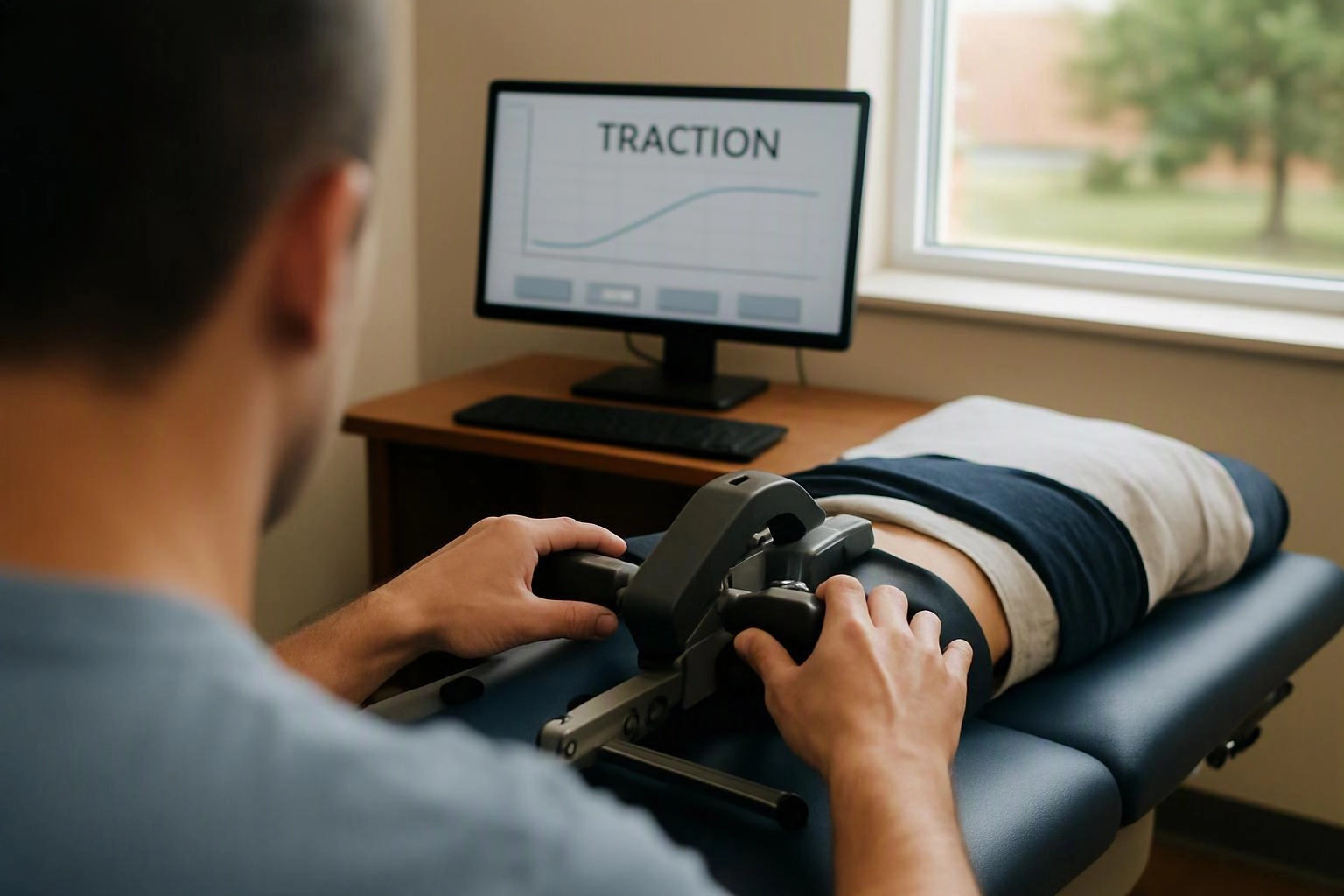
Traction works by applying a measured pulling force along a selected part of the spine or another joint. The force may be applied by hand or through clinical equipment. Positioning helps direct the force toward the area being treated, while the clinician observes comfort, movement, and symptom responses.
Related glossary terms: Lumbar Spine, Nerve Impingement, Referred Pain.
In herniated disc treatment, spinal traction may reduce compressive loading around an affected disc and give nearby tissues room to move. The technique does not push a disc back into place on command. Instead, traction supports a broader care plan that may also address spinal motion, muscle tension, and daily activities.
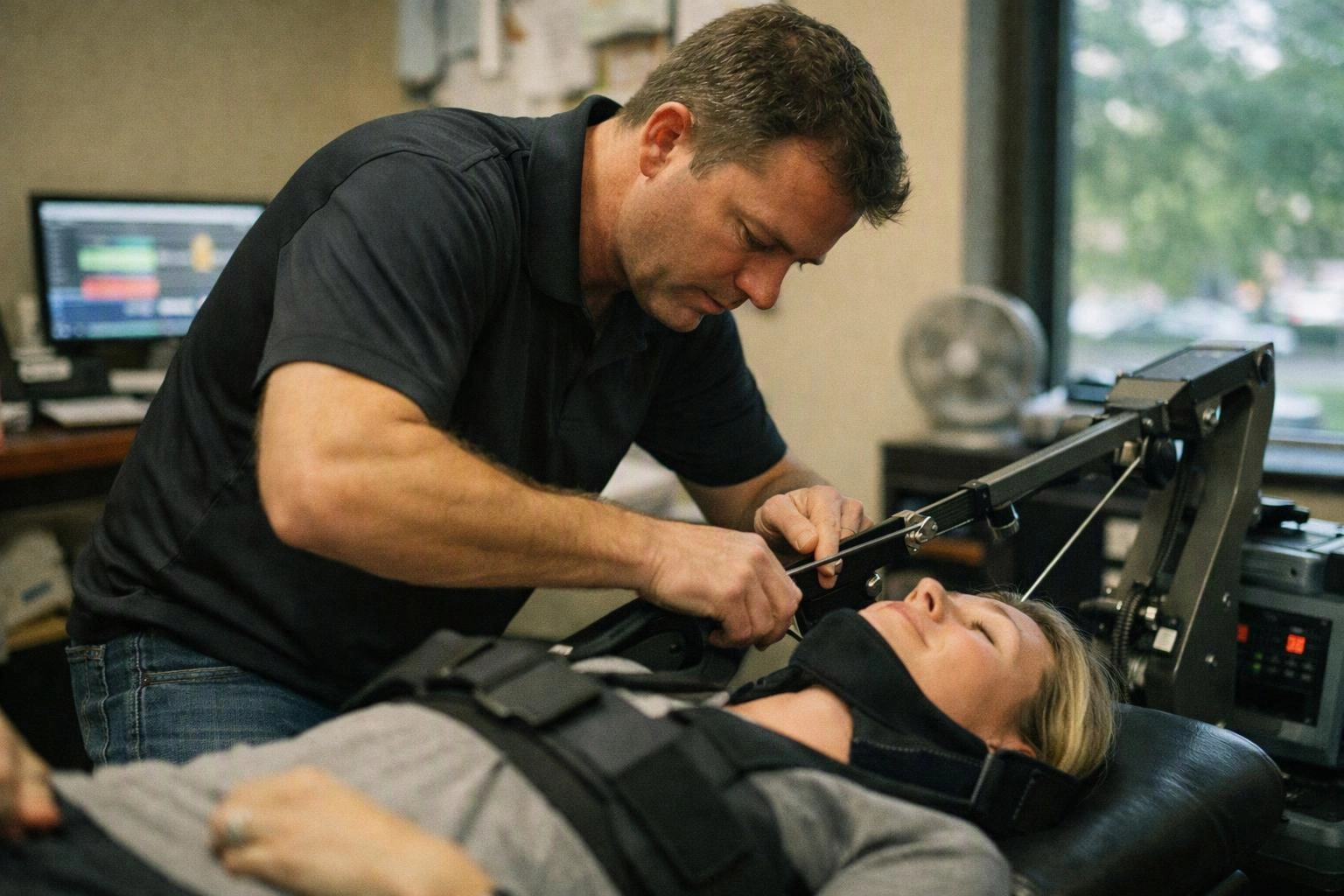
From the Arrowhead Clinic Chiropractor Marietta team
When we use traction, we begin by reviewing the person’s symptoms and checking spinal movement. We then choose a position and pulling direction that match the treatment area. Our team monitors the response during care and adjusts the approach when the findings call for it.
Traction in Practice: A Real-World Example
A person with leg symptoms linked to a lumbar herniated disc may receive traction while positioned to support the lower back. The clinician observes symptom changes and movement during the session, then uses those findings to guide later care.
Related Services
Related Terms
Lumbar Spine
The lumbar spine is the lower section of the spinal column, located between the thoracic spine…
Nerve Impingement
Nerve Impingement is a condition in which nearby tissue places pressure on a nerve or its…
Referred Pain
Referred Pain is pain felt in an area that differs from the tissue or structure causing…
Range Of Motion
Range Of Motion is the extent to which a joint can move through its available directions…
Arrowhead Clinic Chiropractor Marietta
Have Questions About Traction?
Contact Arrowhead Clinic Chiropractor Marietta for practical guidance on Traction and related chiropractor work in Marietta.