
What Is Torticollis?
Torticollis is a neck condition that makes the head tilt or turn to one side. It can limit how easily the head moves in the other direction. In infants, tightness in a neck muscle is a common form. Torticollis can also occur in older children and adults.
Quick Facts About Torticollis
- Category
- Neck movement condition
- Applies to
- Infants, children and adults
- Common confusion
- A temporary head preference
- Also called
- Wry Neck
- Often discussed with
- Pediatric Chiropractic Care, Neck Pain Treatment
Key Takeaways About Torticollis
- Torticollis may be present at birth or develop later.
- A baby's head movement can differ between directions.
- A preferred head position doesn't always mean torticollis.
How Torticollis Works

Torticollis affects the balance of movement around the neck. In muscular torticollis, a tight neck muscle can pull the head toward the shoulder and turn the face away. The amount of movement may differ depending on which way the person looks. Related service: Pediatric Chiropractic Care.
Related glossary terms: Range of Motion, Muscle Spasm, Forward Head Posture.
A baby's preferred position can affect activities such as feeding or looking toward a caregiver. A preference alone doesn't establish the cause. A clinician may also notice a flat area on the baby's head, called positional plagiocephaly, but that isn't the same condition.
Muscle tightness isn't the only possible source of a head tilt. Other causes can involve the eyes, bones or nervous system. The pattern of movement and other signs help a clinician understand what may be involved.
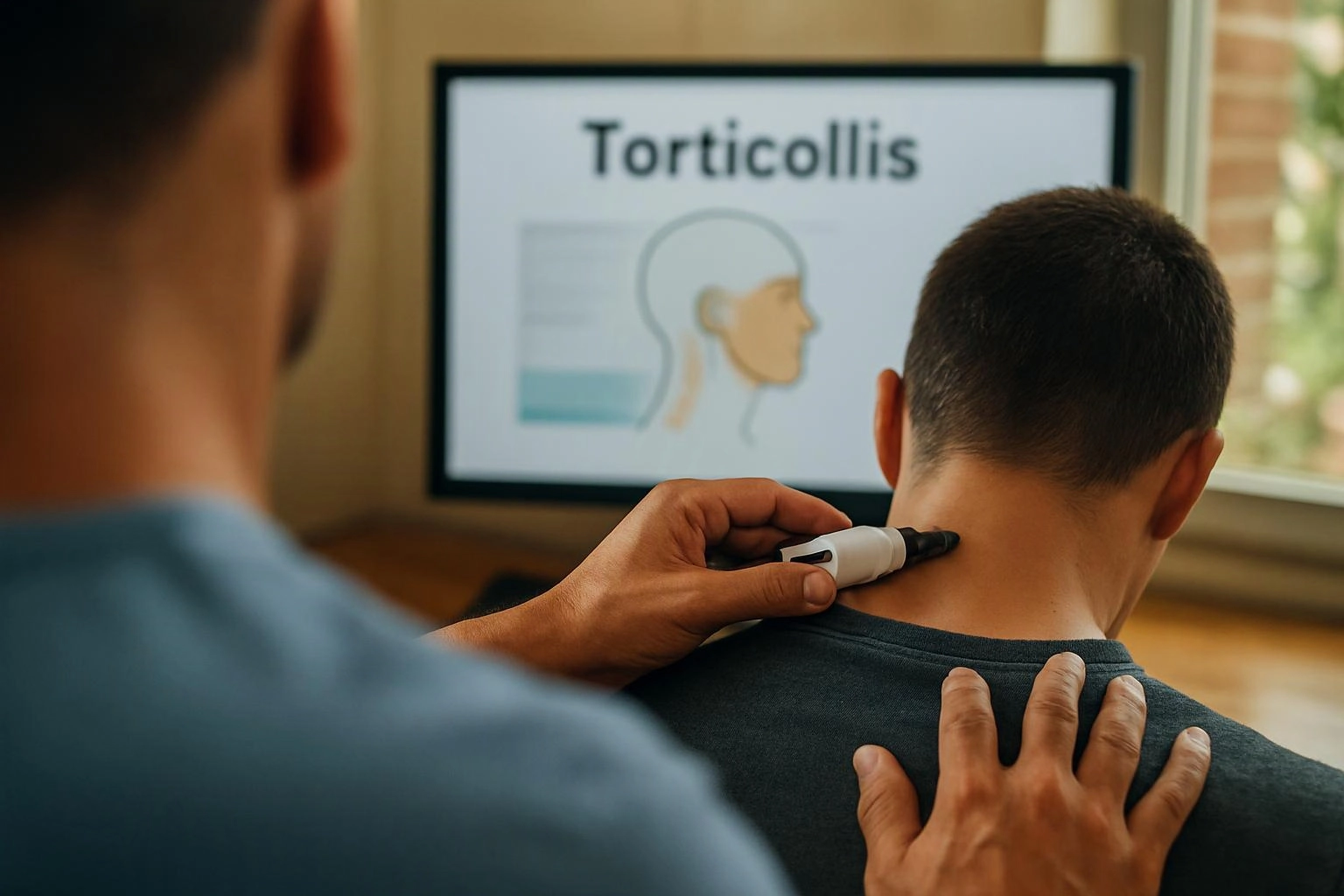
From the Arrowhead Clinic Chiropractor Marietta team
When we see a child with a head tilt during pediatric chiropractic care, we consider how the child moves and what the caregiver has noticed. The pattern helps us decide whether the child needs an assessment from another health professional.
Torticollis in Practice: A Real-World Example
A parent notices that their baby looks toward the same side during feeding. During a pediatric chiropractic visit, the movement pattern gives the clinician context for the parent's concern.
Related Services
Related Terms
Range of Motion
Range of motion is the amount of movement available at a joint in a particular direction.
Muscle Spasm
A muscle spasm is a sudden, involuntary tightening of a muscle that you cannot control.
Forward Head Posture
Forward Head Posture is a posture pattern in which the head rests ahead of the shoulders when viewed from the side.
Arrowhead Clinic Chiropractor Marietta
Have Questions About Torticollis?
Contact Arrowhead Clinic Chiropractor Marietta for practical guidance on Torticollis and related chiropractor work in Marietta.