
What Is Spinal Stenosis?
Spinal Stenosis is a narrowing of the spaces within the spine that may reduce room for the spinal cord or nearby nerves. The narrowing can develop in the neck or lower back and may relate to bone changes, disc changes, or thickened tissue. Symptoms can include pain, numbness, tingling, weakness, or changes with walking.
Quick Facts About Spinal Stenosis
Category
Spinal condition
Used for
Understanding nerve-related back or leg symptoms
Common confusion
Often confused with sciatica
Also called
Narrowing Of The Spine, Spinal canal stenosis
Often discussed with
Sciatica Treatment
Key Takeaways About Spinal Stenosis
- Narrowing may occur in the neck or lower back.
- Symptoms can change with posture, movement, or walking.
- Spinal stenosis is not the same as sciatica.
How Spinal Stenosis Works
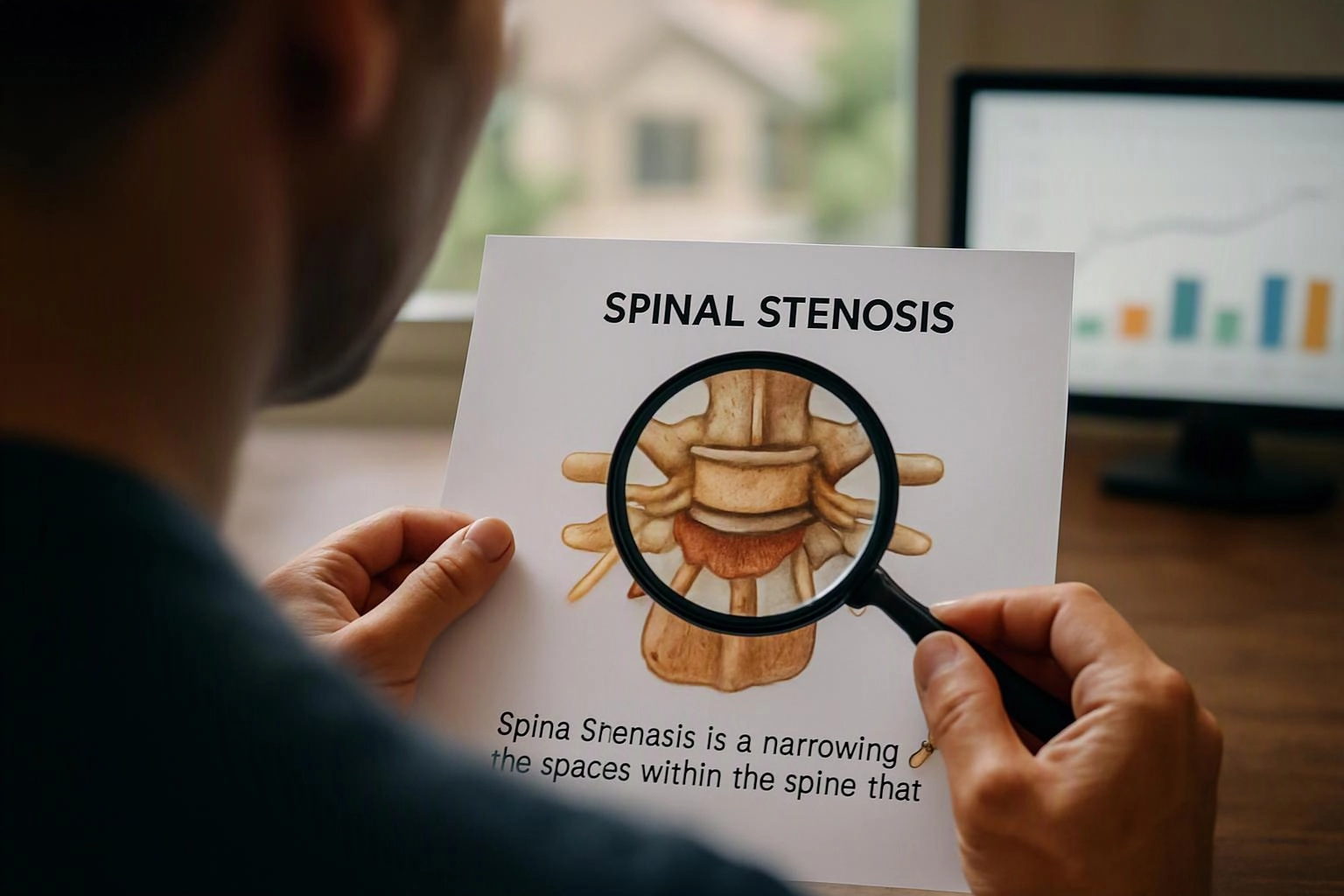
Spinal stenosis changes the available space around the spinal cord or spinal nerves. Bone growth, disc changes, or thickened ligaments may contribute to that narrowing. The location matters because narrowing in the lower back may affect the legs, while narrowing in the neck may affect the arms or other areas.
Related glossary terms: Foraminal Stenosis, Lumbar Spine, Nerve Impingement.
Clinicians assess the condition by reviewing symptoms, movement, strength, sensation, and walking patterns. Imaging may help show the shape of the spinal canal and nearby structures. Symptoms do not always match the degree of narrowing, so a complete assessment connects scan findings with the person's actual function.
Spinal Stenosis and Sciatica
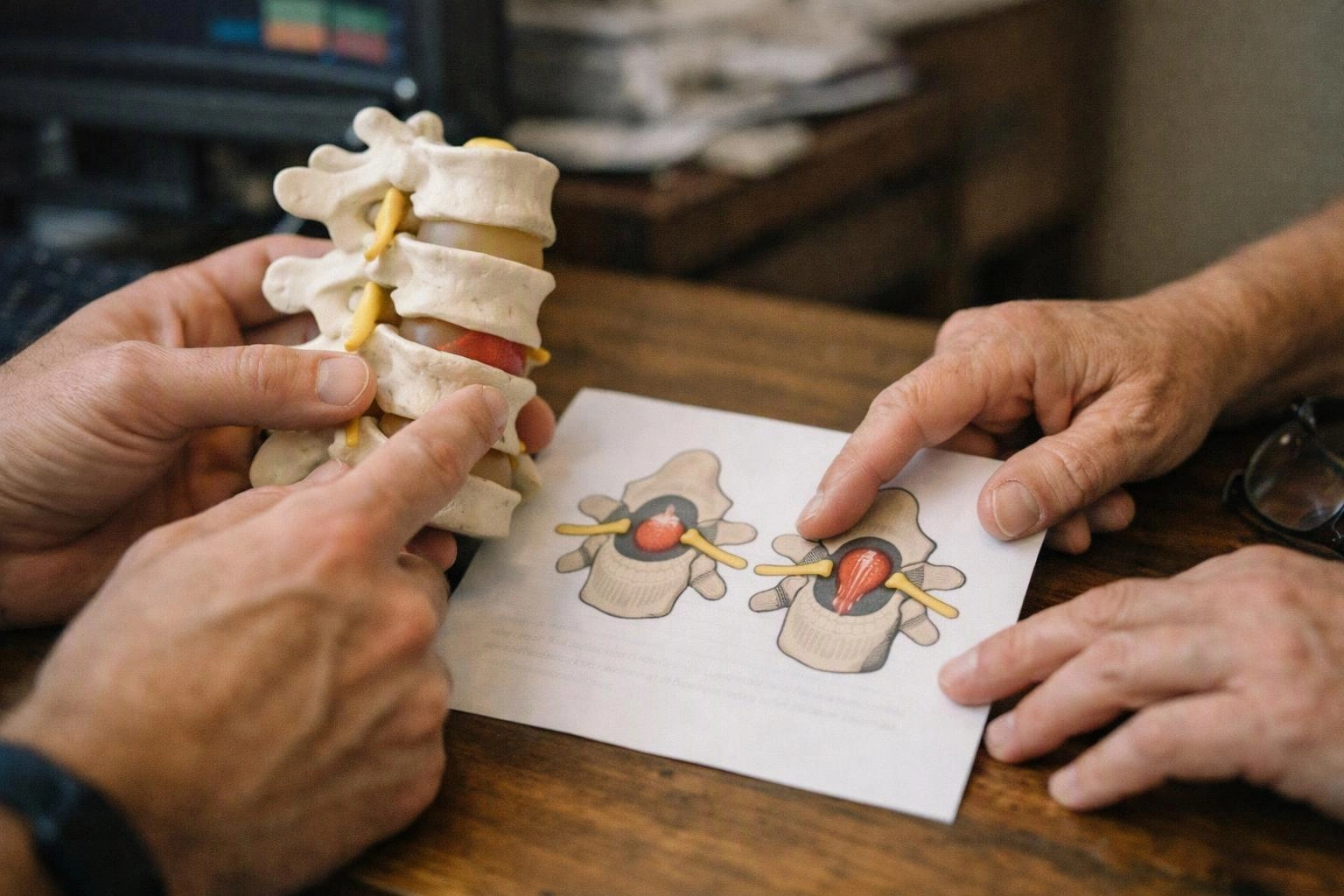
Sciatica describes pain or other nerve symptoms along the sciatic nerve. Spinal stenosis can contribute to sciatica when lower-back narrowing affects a related nerve root. A person may have one condition, both conditions, or another cause of similar symptoms.
From the Arrowhead Clinic Chiropractor Marietta team
When we evaluate Spinal Stenosis during sciatica treatment, we review symptom patterns, posture, movement, and nerve-related changes. We also consider whether symptoms vary during walking, standing, sitting, or bending. Our team uses that information to guide a careful clinical assessment and determine whether further medical evaluation is appropriate.
Spinal Stenosis in Practice: A Real-World Example
A person with lower-back Spinal Stenosis may feel leg discomfort or tingling after standing or walking. Symptoms may ease after sitting or changing posture, although the pattern can differ from person to person.
Related Services
Related Terms
Foraminal Stenosis
Foraminal Stenosis is a narrowing of the openings between spinal bones where nerve roots leave the…
Lumbar Spine
The lumbar spine is the lower section of the spinal column, located between the thoracic spine…
Nerve Impingement
Nerve Impingement is a condition in which nearby tissue places pressure on a nerve or its…
Arrowhead Clinic Chiropractor Marietta
Have Questions About Spinal Stenosis?
Contact Arrowhead Clinic Chiropractor Marietta for practical guidance on Spinal Stenosis and related chiropractor work in Marietta.