
What Is Lordosis?
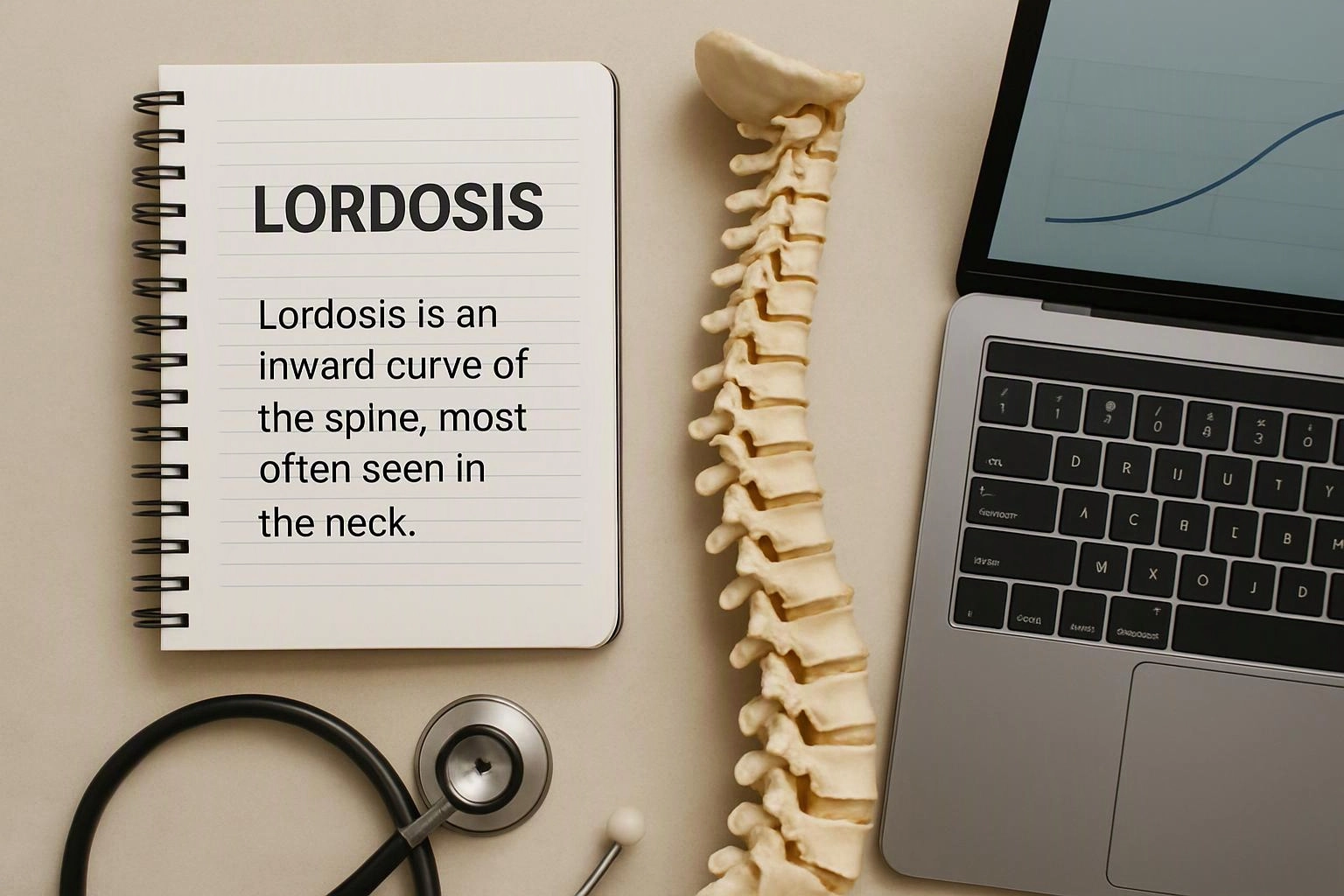
Lordosis is an inward curve of the spine, most often seen in the neck or lower back. The curve helps the spine distribute body weight and support movement. Excessive or reduced curvature may affect posture, balance, and comfort. A posture assessment considers lordosis alongside pelvic position, muscle tension, and spinal alignment.
Quick Facts About Lordosis
Category
Spinal alignment pattern
Used for
Posture assessment
Common confusion
Often confused with scoliosis
Also called
Swayback
Often discussed with
Posture Correction
Key Takeaways About Lordosis
- The curve appears most often in the cervical or lumbar spine.
- Pelvic position can change how lower-back lordosis appears.
- Lordosis is not the same as scoliosis, which involves sideways curvature.
How Lordosis Works
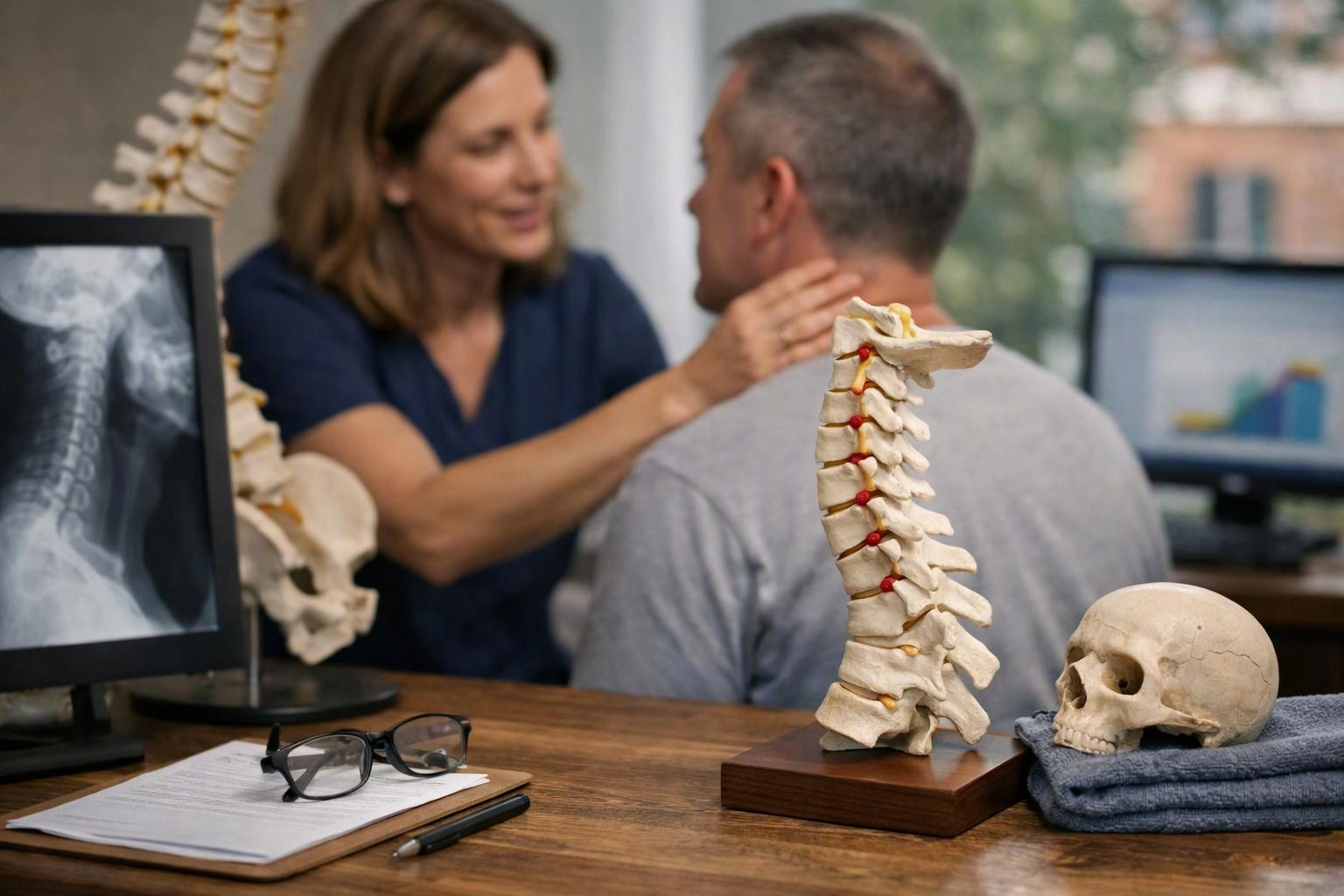
Lordosis describes how the spine curves inward when viewed from the side. The neck and lower back normally contain this curve. The shape helps position the head and trunk over the pelvis during standing and movement.
Related glossary terms: Anterior Pelvic Tilt, Lumbar Spine, Kyphosis.
A posture assessment looks at the curve in relation to the lumbar spine, pelvis, hips, and surrounding muscles. A forward pelvic tilt may make the lower-back curve look more pronounced, while muscle stiffness can affect how a person holds the spine. During posture correction, a clinician observes standing alignment and movement patterns. The findings help separate a structural curve from a position that changes with movement or muscle control. Anterior pelvic tilt may appear alongside increased lumbar lordosis, but the terms describe different alignment features.
From the Arrowhead Clinic Chiropractor Marietta team
When we assess lordosis, we observe standing posture, pelvic position, and spinal movement together. Our team also considers muscle tension and movement control, since the visible curve may change as you move. We use these observations to guide posture correction work that fits the assessment findings.
Lordosis in Practice: A Real-World Example
During a posture correction visit, a person may stand with the pelvis tipped forward and the lower back appearing more curved. The clinician observes whether that position changes during guided movement and considers the surrounding hip and back muscles.
Related Services
Related Terms
Anterior Pelvic Tilt
Anterior Pelvic Tilt is a forward rotation of the pelvis that increases the inward curve of…
Lumbar Spine
The lumbar spine is the lower section of the spinal column, located between the thoracic spine…
Kyphosis
Kyphosis is an excessive forward curve of the upper spine that creates a rounded back appearance…
Arrowhead Clinic Chiropractor Marietta
Have Questions About Lordosis?
Contact Arrowhead Clinic Chiropractor Marietta for practical guidance on Lordosis and related chiropractor work in Marietta.